








You notice it in your language. You notice it in your contact list. You notice it when three drops of rain appear on the windscreen and every group chat becomes a live weather newsroom.
The region is far too large and varied to reduce to one experience, and life in Beirut is not life in Muscat, Riyadh, Cairo or Dubai. But residents across the Gulf, especially in the UAE, often recognise a shared collection of habits, phrases and small absurdities. They are not official traditions. They are the unofficial signs that you have been here long enough to understand the rhythm.
1. Your English becomes international English
You may arrive speaking polished, grammatically complete English. A few months later, efficiency wins. Your sentences become shorter, faster and perfectly understandable to the people around you.
“You come my house?” “Same same.” “Finish, no problem.” “Why you like this?”
This is not English getting worse. It is English becoming shared infrastructure. In a city where a single conversation may include five first languages, people naturally simplify, borrow expressions and focus on meaning. The result is a practical dialect built for real life rather than an exam paper.
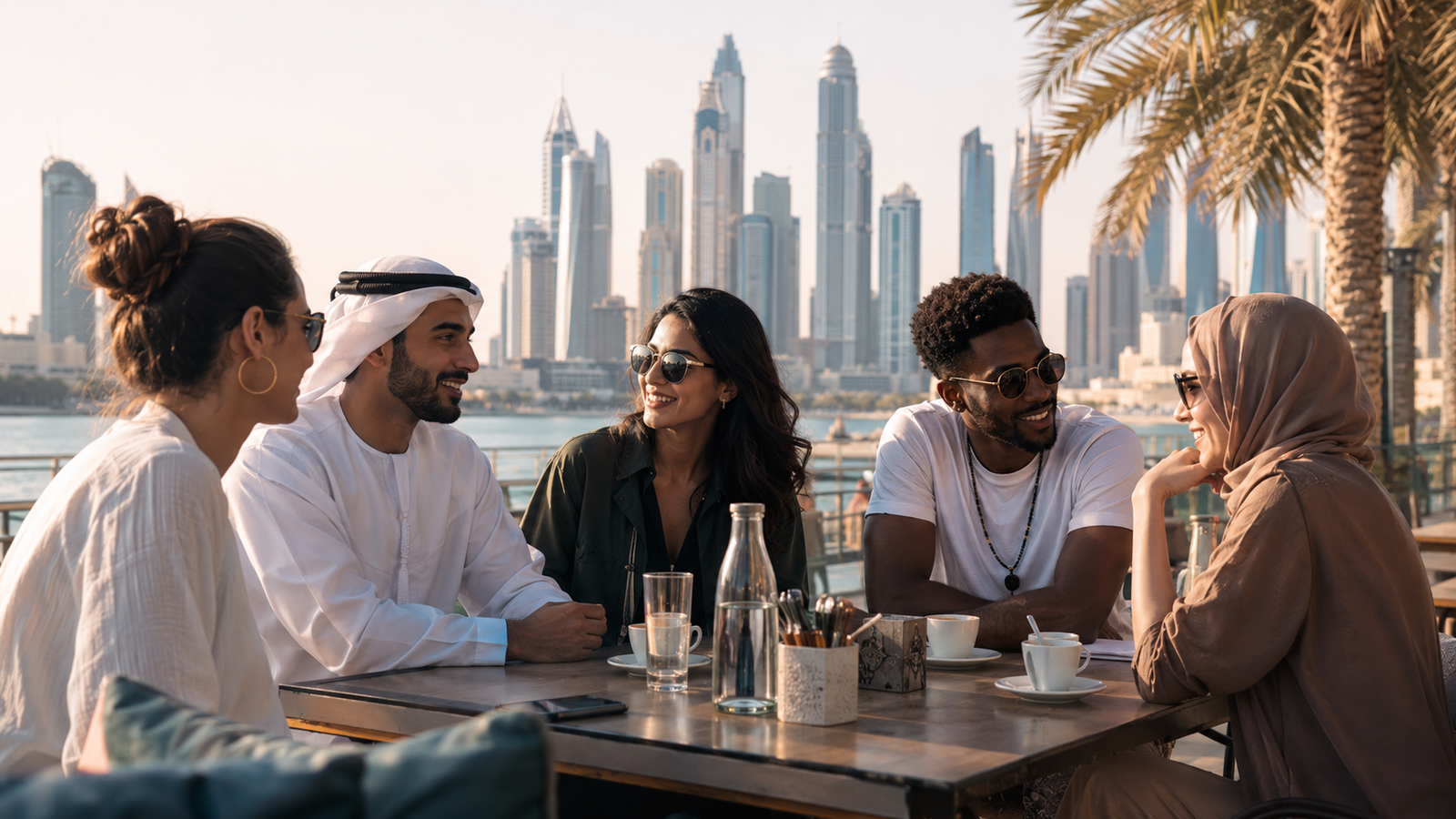
2. Your friend group looks like a mini United Nations meeting
A Filipino best friend. A Lebanese flatmate. An Indian colleague. A British neighbour who has lived in the Gulf since the late 1990s. An Egyptian friend who knows where to find everything. An Emirati friend who explains the context everyone else missed.
Dubai and the wider UAE are home to people from more than 200 nationalities. That diversity is not an abstract statistic. It changes birthdays, dinners, office conversations and the number of languages used to say “I am five minutes away”.
The magic is not that nobody is from here. Emirati culture is the foundation of the country. The magic is that people who are from here and people who arrived from almost everywhere else build a daily life together.
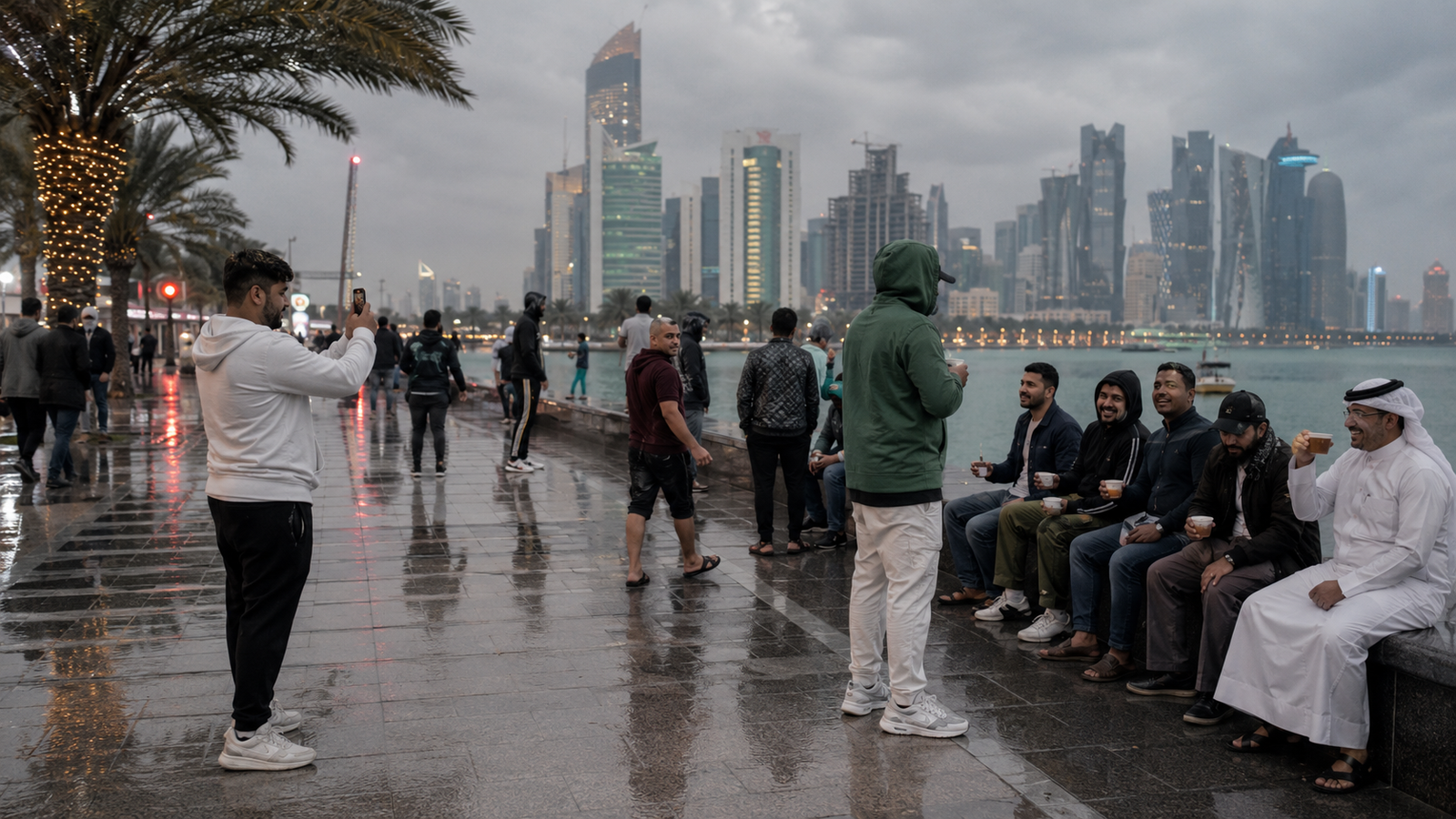
3. Rain becomes a national event
In countries where rain is routine, weather is background noise. In much of the Gulf, rain is content.
The first drops appear and balconies fill. Phones come out. Tea is made. Roads become the subject of immediate tactical discussion. Someone suggests driving to the Corniche or the beach “to enjoy the weather”, while someone else announces that they will not leave the house under any circumstances.
The excitement is understandable. Rain changes the colour, smell and sound of the city. For a few hours, familiar streets feel completely different.
4. You measure distance in minutes, never kilometres
Ask a Dubai resident how far something is and you will rarely receive a number in kilometres.
“It is 15 minutes, no traffic.”
Those final two words carry the whole meaning. A place can be geographically close and emotionally far if it requires the wrong interchange at the wrong time. Another place can be 40 kilometres away and still be described as “near” because the road is open and the parking is easy.
This is Sheikh Zayed Road brain: distance is not space. Distance is conditions.
5. “Five minutes” becomes a flexible concept
In some contexts, five minutes means five minutes. In others, it means the person has started thinking about leaving.
You learn to read the full message. “Coming” may mean the car has started. “On the way” may mean shoes are being located. “Parking” is the only truly reliable update.
6. The date-tree threat is real
Date palms are elegant, generous and deeply connected to the region. They can also surprise you.
In summer, a firm date can fall from a height with enough confidence to make you reconsider walking directly beneath the tree. The experience is brief, harmless in most cases and somehow feels like an initiation ceremony: welcome home, please remain aware of nature.
7. Air conditioning becomes part of route planning
You stop planning only where to go. You plan the transitions.
How far is the walk from the car park? Is the metro connection indoors? Is there shaded valet access? Will the restaurant’s terrace actually be enclosed? Summer teaches you that 300 outdoor metres can be longer than an entire mall.
8. You carry a layer for indoors, not outdoors
Outside, the heat makes every extra layer feel ambitious. Inside, the air conditioning may make you wish you had brought a jacket.
The practical resident keeps a cardigan, overshirt or scarf nearby. It is the Gulf’s seasonal contradiction: dressing for two climates at the same time.
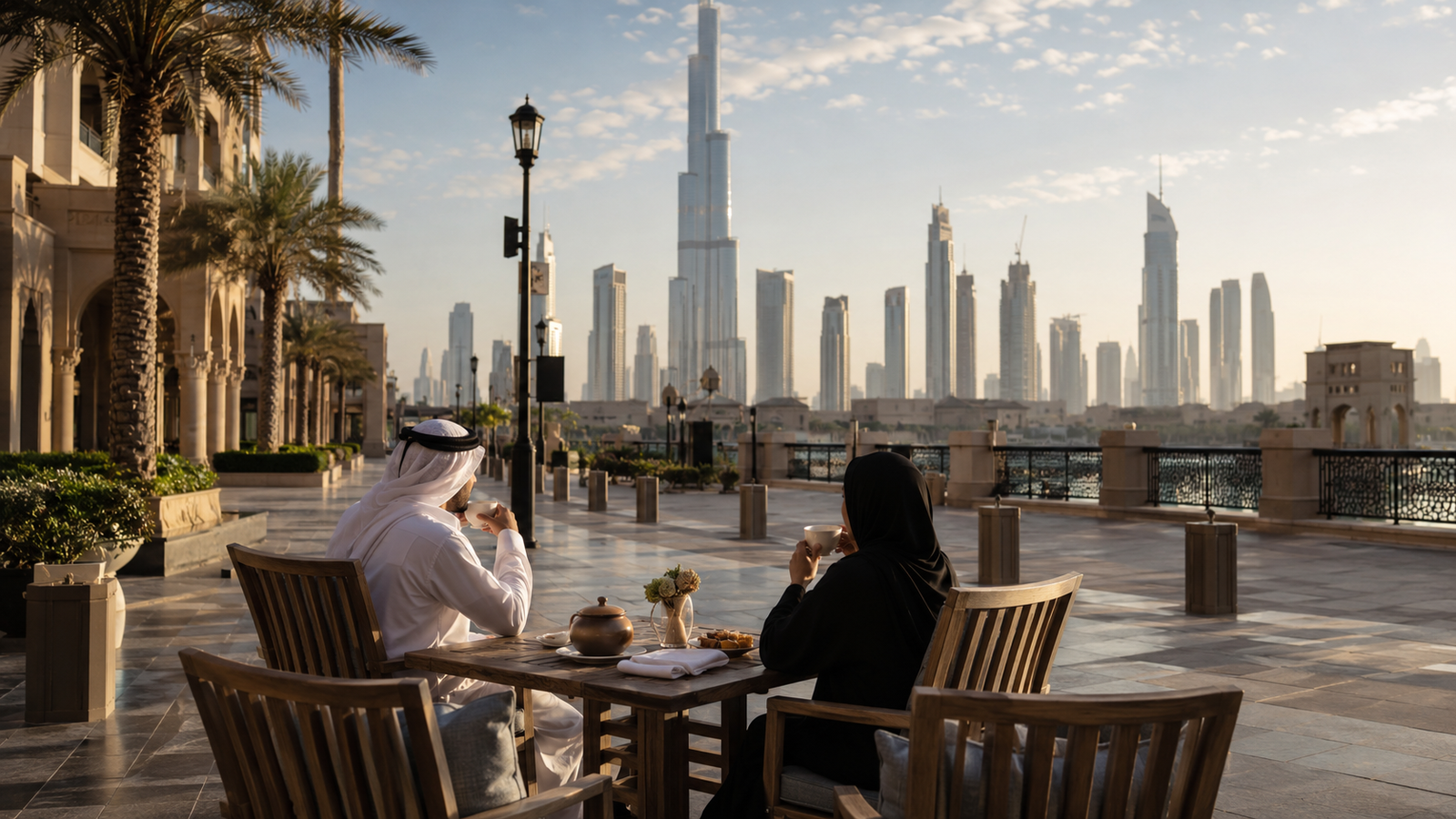
9. Friday mornings feel different
Before the brunches, errands and afternoon plans, Friday mornings can make the city feel paused.
The roads are quieter in many neighbourhoods. Cafés open into a slower rhythm. The light feels softer. For people whose weeks are built around deadlines and traffic, the calm can feel like the city has briefly exhaled.
10. You become unusually specific about neighbourhoods
You stop saying someone lives “in Dubai”. You say Marina, Mirdif, JVC, Deira, International City, Al Barsha, Downtown, Silicon Oasis or somewhere “near the exit”.
Each neighbourhood has its own daily logic: parking, groceries, cafés, school traffic, delivery speed and the precise time at which leaving becomes a mistake.
11. Home becomes more than one place
Perhaps the biggest change is emotional. You can miss the country you came from while feeling protective of the place you live now. You can complain about traffic, renewal fees and summer humidity, then feel offended when someone who has never lived here reduces the region to a stereotype.
That contradiction is one of the clearest signs of belonging. Home is no longer a single point on a map. It is a network of people, routines, phrases and ordinary moments that would be difficult to explain to someone who has not lived them.
The real sign that you belong
It is not the number of years on your residence visa or how confidently you navigate Sheikh Zayed Road. It is the moment the strange things stop feeling strange.
You hear “same same” and understand exactly what it means. You see rain and check the group chat. You tell someone the destination is “close, maybe 20 minutes”. Then you pause and add the only detail that matters: no traffic.
FAQ
Is this experience the same across the entire Middle East?
No. The Middle East includes many countries, languages and cultures. These observations reflect common urban Gulf experiences, particularly life in the UAE and Dubai.
Why is English spoken differently in Dubai?
Dubai is highly multilingual. People naturally simplify and adapt English so colleagues, neighbours and friends with different first languages can communicate quickly.
Why do Dubai residents measure distance in minutes?
Travel time can change significantly by route, traffic, parking and time of day, making minutes more useful than kilometres in everyday conversation.