





Khalfan Belhoul Dubai Future Foundation leadership is built around a difficult assignment. He is responsible for helping a city prepare for changes that are not fully visible yet. Artificial intelligence, new economic models, climate pressure, robotics, and the future of work are not separate conversations. They are connected forces that can reshape how a city competes and how people live.
Belhoul serves as Chief Executive Officer of Dubai Future Foundation. His role is not to predict one perfect version of tomorrow. It is to create systems that allow Dubai to test possibilities early, learn quickly, and bring government, business, researchers, and entrepreneurs into the same room.
That makes his work a useful leadership study. The future becomes manageable when it is turned into a portfolio of experiments.
Khalfan Belhoul Dubai Future Foundation leadership connects ideas to action
The World Economic Forum describes Belhoul as a leader with more than a decade of experience in organisations that support Dubai’s economic diversification. Before joining the Foundation, he worked in strategy at Dubai Holding and helped shape investment direction across several asset classes.
At Dubai Future Foundation, his responsibilities span future research, knowledge, capacity building, acceleration, and public experiences. Those activities can sound abstract until they are viewed as one connected system.
Research identifies a possible shift. Training prepares people for it. Accelerators give companies room to test solutions. Partnerships connect the solution to a real institution. Public experiences help society understand why the change matters.
The model is designed to reduce the distance between an ambitious idea and a practical result.
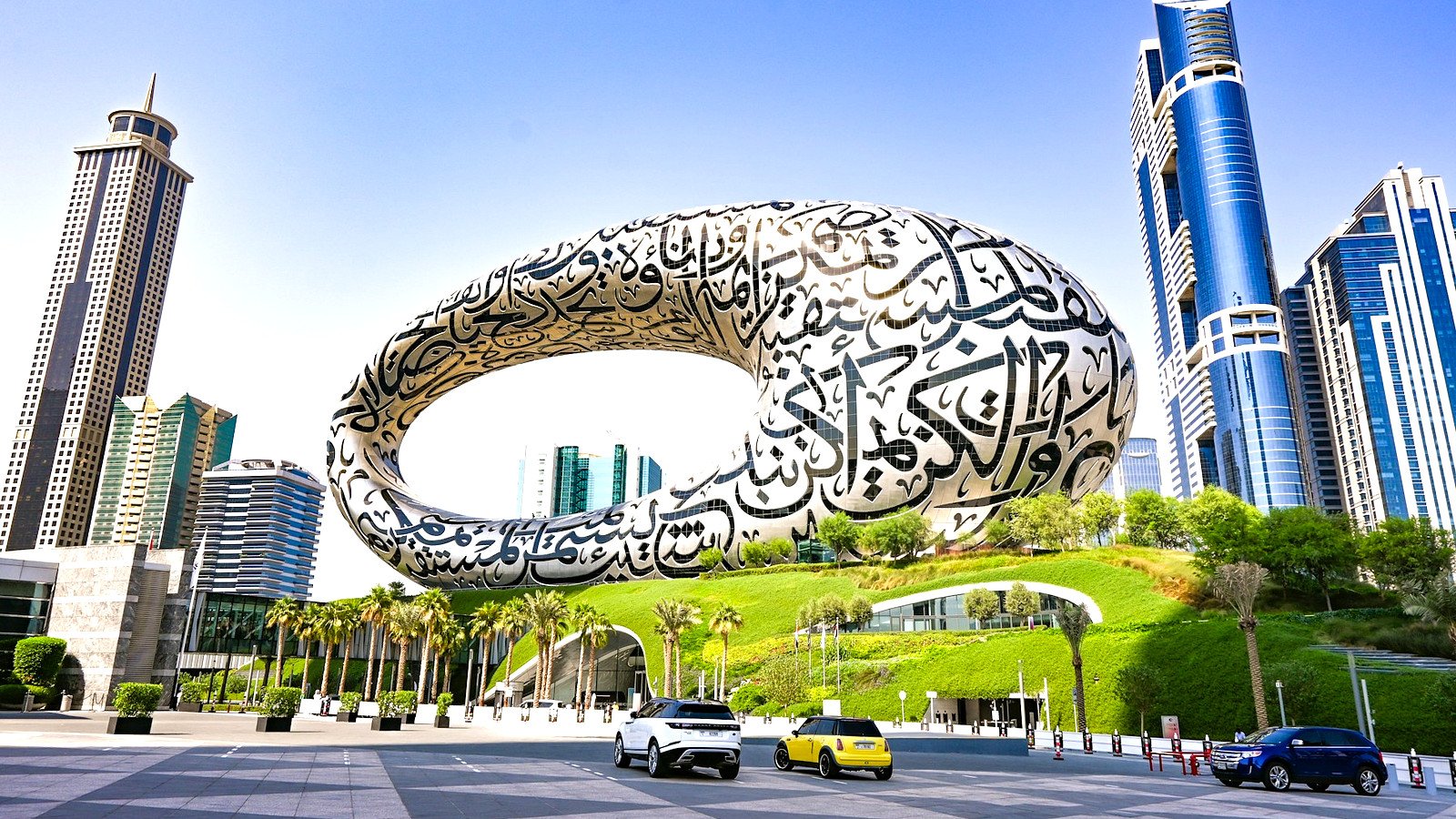
The Museum of the Future is a platform, not only a landmark
The Museum of the Future is one of Dubai’s most photographed buildings, but its leadership value lies beyond the exterior. It gives complex subjects a public stage and makes future thinking visible to residents, visitors, researchers, and decision makers.
Belhoul has described the Museum as part of a wider effort to convene people and explore what comes next. This approach matters because innovation can become isolated when it lives only inside technical teams. Public understanding helps ambitious policy and new technology earn relevance.

The building also communicates something about Dubai’s operating style. The city does not wait for the future to become ordinary before discussing it. It creates a place where emerging ideas can be experienced while their implications are still forming.
AI creates a leadership test, not only a technology test
Artificial intelligence is now central to almost every future strategy. The leadership challenge is deciding where it creates real value, what risks need governance, and how people can develop the skills to use it responsibly.
Belhoul’s work places collaboration at the centre of that challenge. Government cannot build the future alone. Technology companies cannot set the social rules alone. Researchers cannot create impact without access to real environments.
The Foundation acts as a connector. That role may be less visible than launching a product, but it can be more influential. A city becomes an innovation hub when good ideas can find regulation, talent, capital, customers, and a place to be tested.
What leaders can copy from the Dubai model
The first lesson is to make the future specific. A vague ambition to become innovative creates little accountability. A programme with a clear problem, partner, experiment, and deadline can produce evidence.
The second lesson is to build networks before a crisis makes them necessary. Relationships between government, industry, and research become far more useful when trust already exists.
The third lesson is to treat learning as an operating function. Leaders often reward certainty, even when teams are working on unfamiliar problems. A future focused organisation needs space to test, fail responsibly, and improve without hiding the result.
Khalfan Belhoul Dubai Future Foundation leadership is not about having a crystal ball. It is about giving a city more intelligent options before change becomes urgent.
For more stories about leadership and innovation in the UAE, visit Business and Entrepreneurship.
Frequently Asked Questions
Who is Khalfan Belhoul?
Khalfan Belhoul is the Chief Executive Officer of Dubai Future Foundation.
What does Dubai Future Foundation do?
The Foundation researches emerging change, builds future skills, supports experiments, connects innovators with institutions, and creates public experiences that help Dubai prepare for new opportunities.
Is the Museum of the Future part of Dubai Future Foundation?
Yes. The Museum is part of the wider ecosystem used to explore, communicate, and accelerate future focused ideas.
What is the main leadership lesson from Khalfan Belhoul’s work?
The central lesson is that long range ambition becomes useful when leaders translate it into partnerships, experiments, measurable learning, and practical capacity.